Sunday, August 30, 2015

Common stinkhorn

Despite its foul smell, the mushroom is not poisonous and immature mushrooms are consumed by some. Probably because of its reputation as an aphrodisiac.

Crispy mushrooms, anyone?

Blomkålsopp
Edible when in better shape than here

Poisonous Amanita


Brun fluesopp
Poisonous

Yellow pigments in tooth fungus

Hydnellum geogenium
The name comes the Greek hydnum meaning spongy plant or fungus.
Fruitbodies of the fungus contain a yellow pigment compound called geogenin.
Inedible

Boletus calopus

Boletus calopus ("calo" meaning "beautiful" and "pus" meaning "foot")
Bitter Beech Bolete
Besk rørsopp
Inedible

Gray almond waxy cap

Distinct smell of almond essence
Edible if you like the smell

Video in French with English subtitles 

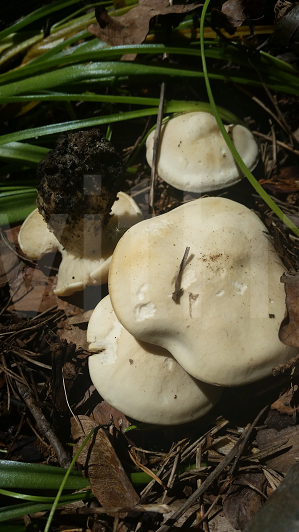
Poisonous Russula

Poisonous

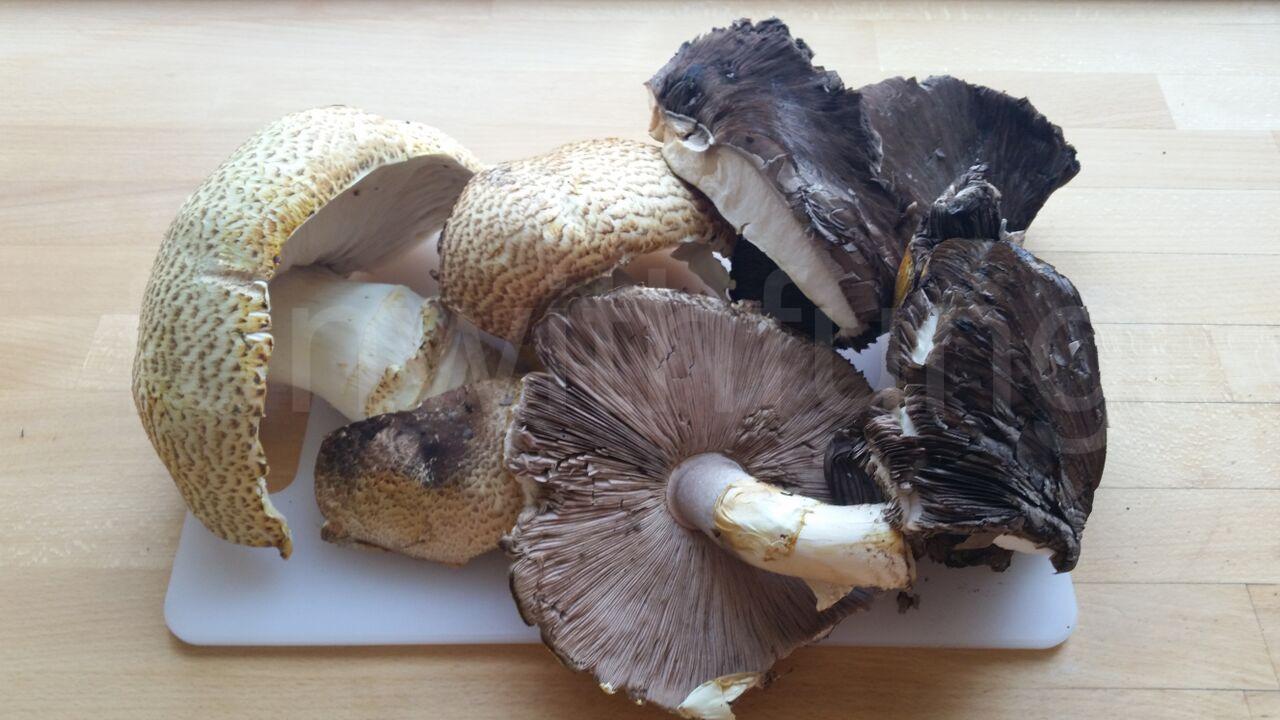
Grey spotted Amanita. Recently pronounced edible by Norwegian mycologists.


Recently pronounced edible if well cooked by Norwegian mycologists. 
Not recommended for amateurs who cannot differentiate between Amanitas.


Cortinarius cumatilis

What is purple and grows by spruce?

Growing in spruce forests
Supposed to smell of pencils
Not edible

Boletus appendiculatus or B. subappendiculatus?

Boletus subappendiculatus?
The choice Boletus appendiculatus (Messingrørsopp) normally grows with oak. 
This mushroom was found in Norway in a pine/spruce forest.
Perhaps Boletus subappendiculatus?
Edible

Just for looking . Not the cooking pot.

Possibly poisonous

Spot the difference!

Fruity Brittlegill (Russula queletii, top) and Primrose Brittlegill (Russula sardonia, bottom)
The Russula queletii grows near spruce, the Russula sardonia near pine.
When compared side by side, the Russula sardonia can be seen to have a darker, redder stem.
Both inedible. Sharp taste.

A mushroom that blushes


Aptly named The Blusher as the mushroom turns reddish when cut or bruised.
Edible (when well cooked)

Friday, July 24, 2015

Finally, the season begins...


A nice group of chanterelles ready for the picking.
Cantharellus cibarius/kantarell.


The grandpop of Agaricus arvensis/Åkersjampinjong

Monday, June 1, 2015

Morels: before and after


Dehydrating is supposed to reduce the weight of fresh mushrooms by 90%. As you can see.

Saturday, May 30, 2015

Morels with "edimentals" of the season

Stephen Barstow coined the term "edimental" to describe plants which are both edible and ornamental.

Here is another pasta primavera with morels, ramp flowers, Hylotelephium maximum (smørbukk) and seeds from Ulmus glabra (almenøtter). 

Monday, May 25, 2015

O happy day!

Come to me, my beauty. Morchella elata/Morel/Spissmorkel

The best Spring can offer: St George's Mushrooms and Morels

Thursday, May 21, 2015

By George!


Found 21 May 2015

Follow the mushrooms!

Turn the mushroom and smell the gills. A bunch of newbies said they smelled petrol, rancid oil, walnut and even something fermented. However, according to the "official" literature in Norway, St George's are to smell mealy (wet flour) or even of pancake batter. Go figure!  


Saturday, May 16, 2015

Finally, morels on my plate

Morchella elata/Spissmorkel

Tomorrow is 17th of May, the Norwegian National Day. But as far as I am concerned, the main celebrations are today as I found morels for the first time this season.

Pasta primavera with spring asparagus, filet of beef and, yes, crispy fried morels.


Looking for the old guy in Ringerike, Norway

Sarcosoma globosum/Svartgubbe
These wonderful mushrooms were thought to be extinct for over 70 years in Norway before they were found on 1 May 2009, to the excitement of the whole mycological community in Norway. They used to be fairly common in the old days and children used to pick them up to throw at each other in the manner of snowball fights. These days, as endangered species, we walk around them in awe, pick them up gingerly and feel their weird jelly weight, before placing them carefully back on the ground. In Sweden, where they are more common, some bakeries make chocolate fondants in their shape. That must be worth a pilgrimage too.  Story in Norwegian


Monday, May 11, 2015

Spring mushroom foray in Kjaglidalen, Norway

Kjaglidalen in Norway is a nature reserve on the outskirts of the capital of Oslo. Every spring Prof Klaus Høiland leads a foray to the valley to look specifically for spring mushrooms, including several Morchella species. The valley is known for its unique flora, fauna and geology. The rule is that one is not allowed to pick anything from the forest EXCEPT the mushrooms. Sometimes mycological justice does prevail.


We found the elusive Discina gigas (Snowbank false morel/Blek sandmorkel)
 Discina gigas was a first for many in the group. 
Unfortunately, no other morels were found.
  
Sarcoscypha austriaca (Scarlet elf cups/Skarlagen vårbeger) lined both sides of the walk
Matteuccia struthiopteris (Fiddleheads/Strutsevinger) and
Anemone nemorosa (Wood Anemones/Hvitveis)

Fiddleheads and scarlet elf cups
Strutsevinger og skarlagen vårbeger
  

Sunday, April 12, 2015

Ramps in Spring. The sign that morels are around the corner!


In Norway, we do not have a tradition of harvesting the bulbs. Only the leaves.

Just before the flowers burst out and the picking is over.

Pickled buds of ramps, Momofoku-style (I halved the sugar) (left)
The green goodness of puréed ramps with rapeseed oil and sea salt (right) to be used with EVERYTHING

The price of ramps at the supermarket: NOK 332 pr kg (About 19 US dollars a lb at the current exchange rate)